

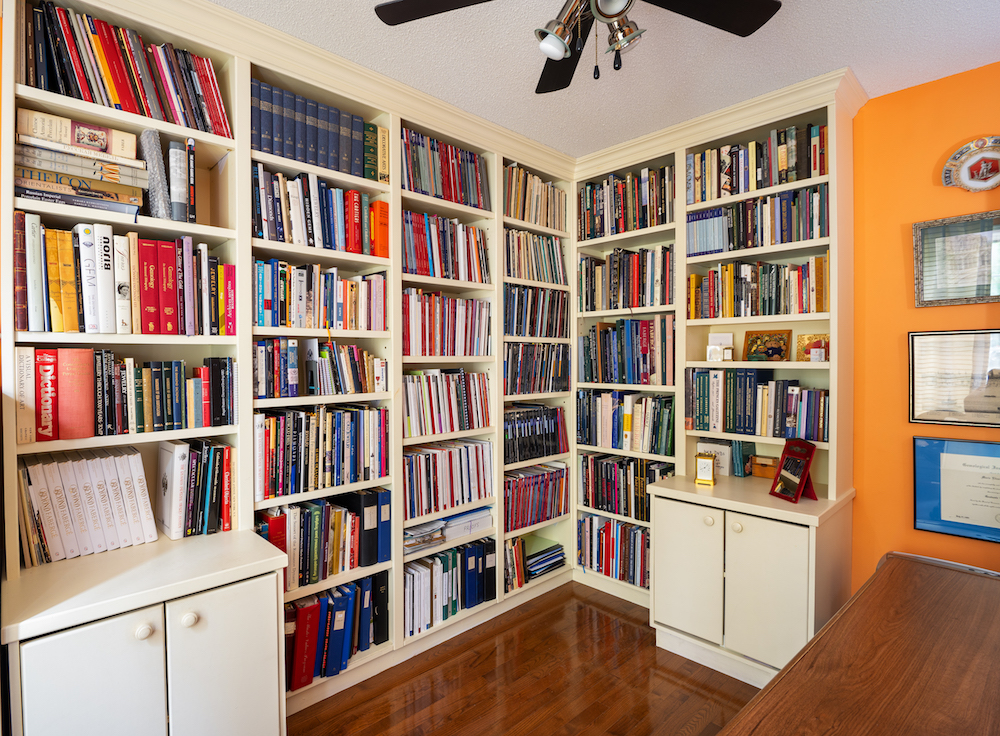
When it comes to jewelry research, nothing replaces a reference library. Trust me, I’ve worked with fabulous colleagues over the years, but my reference library has always been my best coworker and research companion: reliable, informative, full of pleasant surprises, and blissfully undemanding. It’s there when you need it.
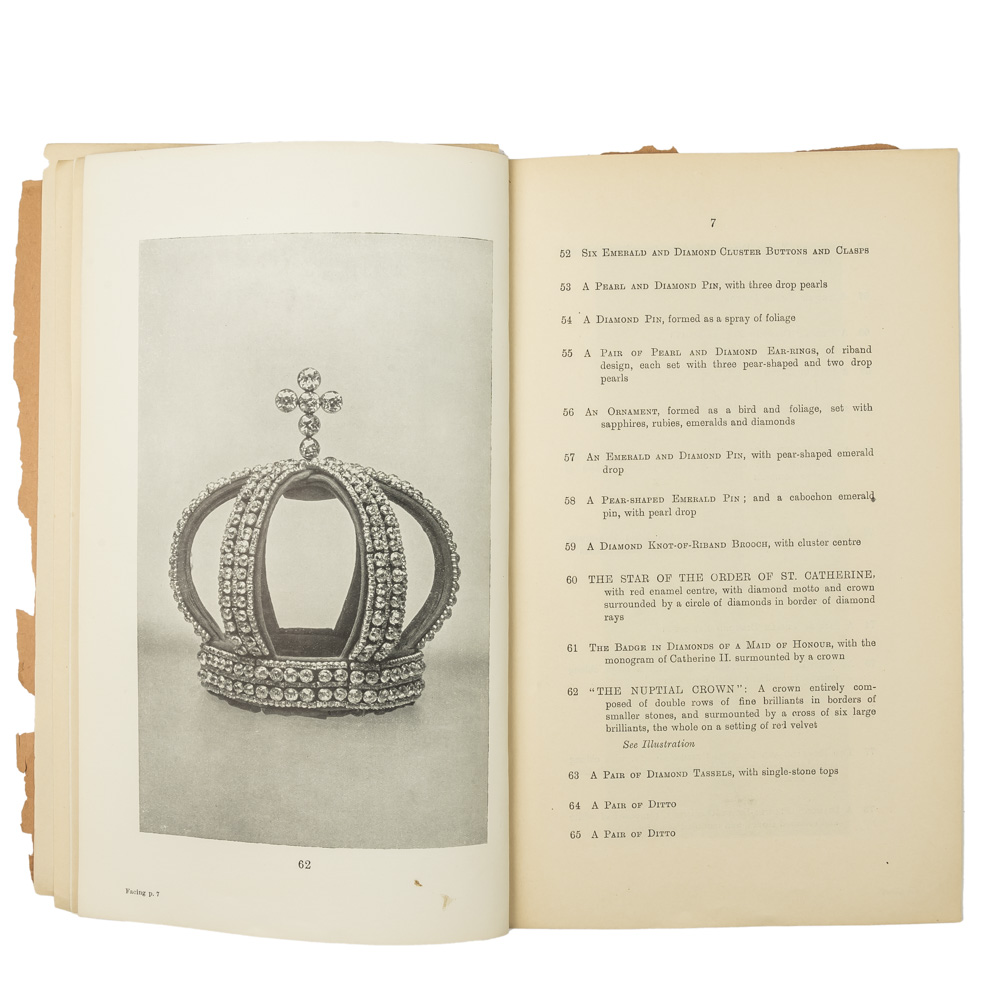
Even today, hard-copy reference books, exhibition catalogs, auction catalogs, and scholarly monographs remain invaluable tools for the trade and collectors. Yes, much is available online today, making research more convenient than ever. But there’s a reason art historians, auction specialists, gemologists, jewelers, collectors and dealers like me continue to collect books.
Speed is one reason. After decades in the business, if I want to revisit a particular sale, it’s often much faster to pull the catalog from my shelf and leaf through it than to search online. Within minutes I’ve found the image, the lot, or the information I was looking for. Many of my catalogs are marked with my own notes from auctions I attended, making them personal records as well as research tools.
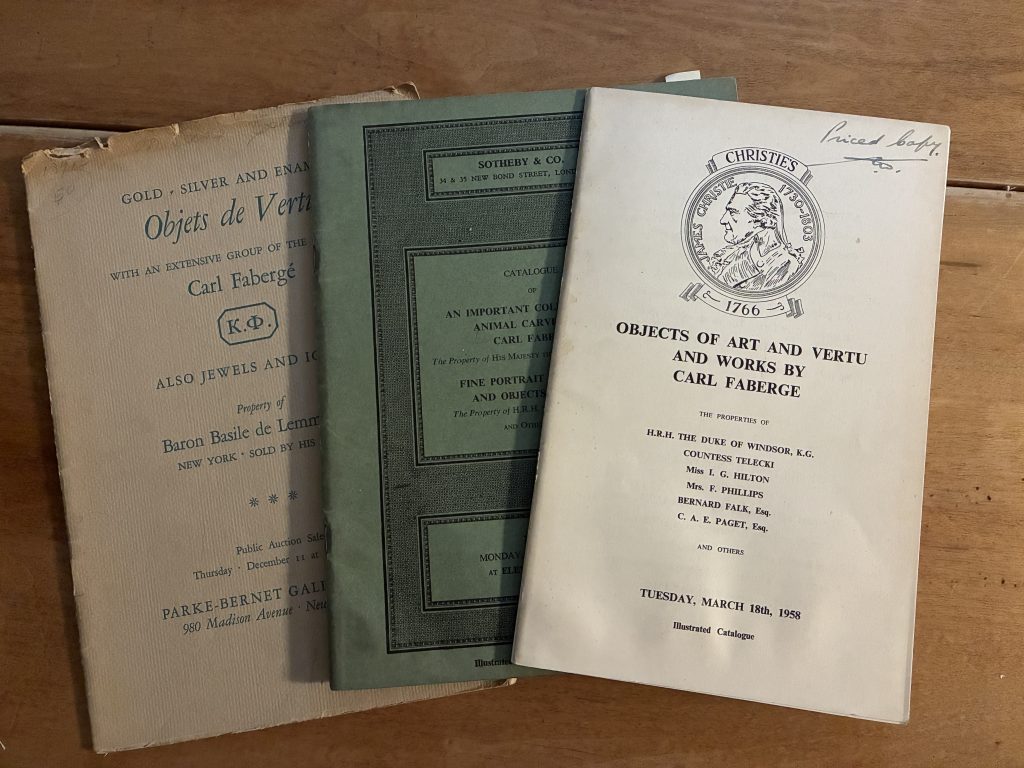
One of the greatest pleasures of collecting vintage auction catalogs is discovering details that have disappeared from modern editions. Early catalogs often included printed price lists (or penciled in prices) showing what sold, what didn’t, what was withdrawn, and sometimes—even more remarkably—the names of the buyers. For more, see Price lists are Priceless in Beyond Fabergé, Russian Imperial jewelry.
Access to auction records is essential to my work. Now, when buying inventory or researching provenance, they provide an invaluable record of the market at the time. Having the catalogs arranged chronologically on my shelves allows me to compare sales, trace objects, and uncover connections that might otherwise be missed.
My Russian auction and exhibition catalogs date back to the 1930s. I still consult them regularly and have kept nearly every major sale catalog through 2000, when most auctions became fully digitized. Clients often call asking me to look up an early sale, and I’m always happy to help.
A great reference library is more than a collection of books. It’s a working archive, a source of inspiration, and a record of a lifetime spent studying beautiful objects. And yes—they also happen to look wonderful on the shelf.