

It’s as if someone knew it was Rare Jewels & Treasures 35th Anniversary and wanted to make it extra special.
My heartbeat quickened as I reached for the DHL package full of anticipation.
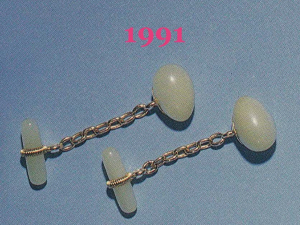
1991 marked my first year in business. It was during the First Gulf War and things were slow. Then out of the blue, I managed to acquire a remarkable group of Russian jewels from a descendant of Daria Petrovna Hesse (1890-1977), lady-in-waiting to Grand Duchess Olga Nikolaevna. From that collection came my first major sale: a pair of egg-shaped cufflinks by Fabergé workmaster Erik Kollin, carved in pale green bowenite and preserved in their original case.
They set a standard.
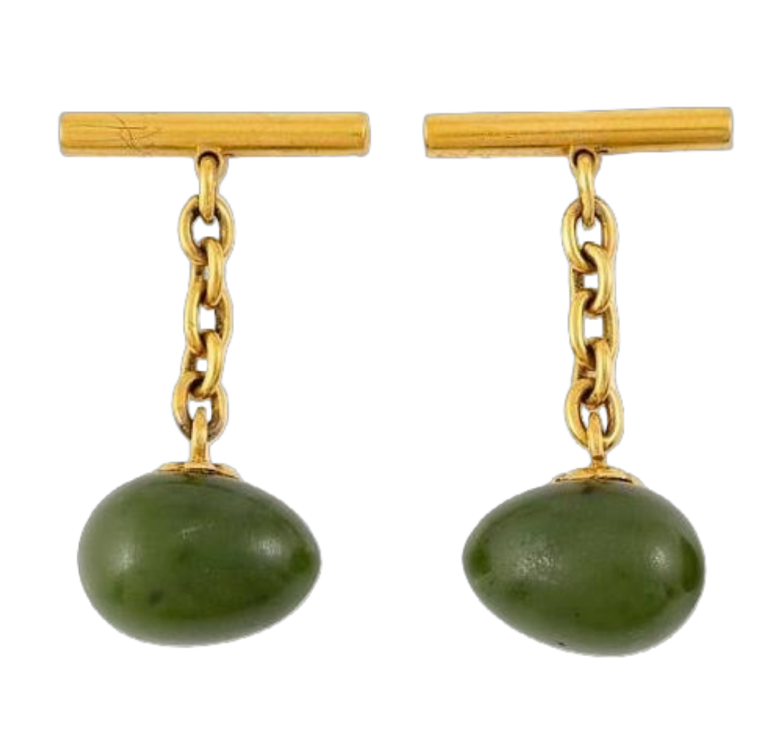
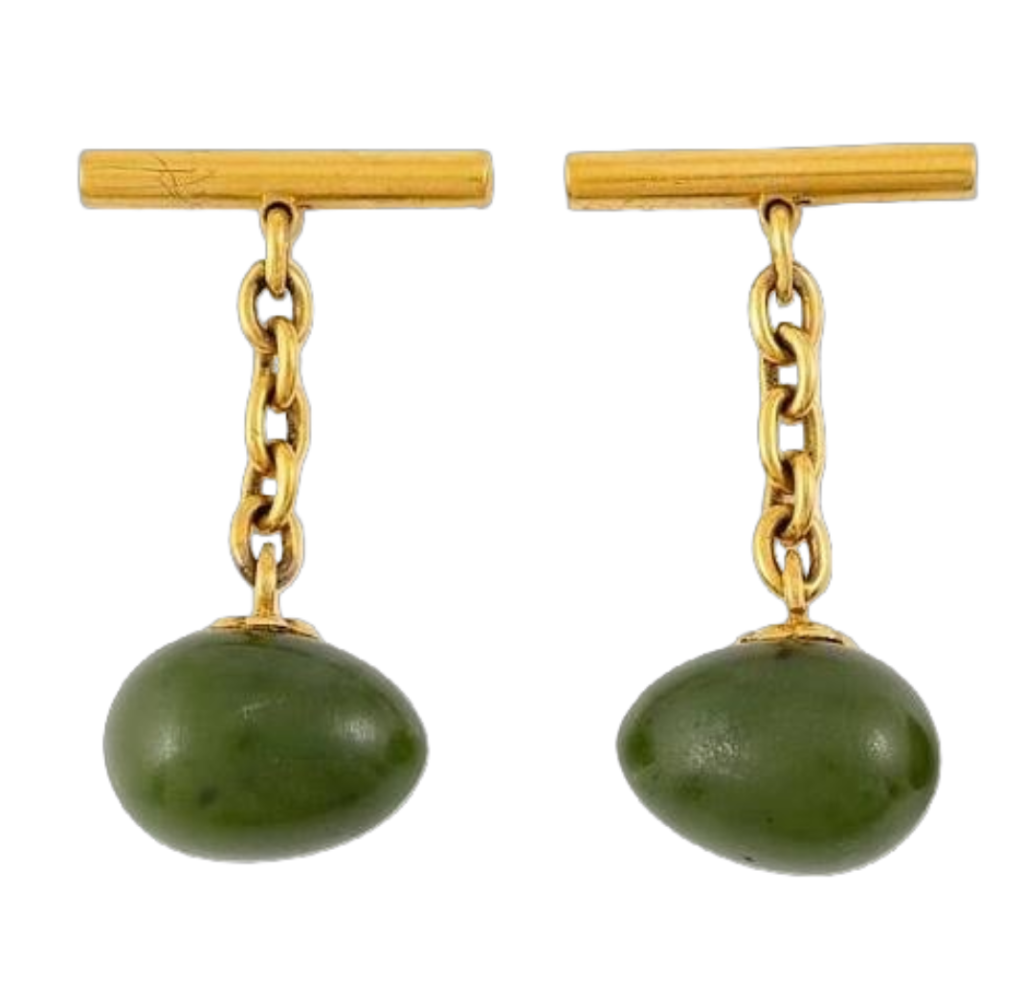
Opening the teal fitted case this time, I had the same instinct. Inside was only the second pair of egg-shaped Kollin cufflinks I have encountered in over three decades.
The silk-lined case, stamped C.F. Carlman of Stockholm, only reinforced the impression.
There they were nestled in their slots, looking as beautiful as when they were first made. They were perfect in their simplicity, the luster of the nephrite-muted, as is expected with an item of this age.
The Evidence
Under close examination, everything aligned exactly as it should. The gold carried a wonderful patina; on it the faint traces of an inventory number, the nephrite carving was precise-two perfect eggs; there were no signs of alteration or repair. The hallmarks told the rest of the story: “56” for gold standard, the St. Petersburg town mark, and finally “EK” for Erik Kollin—stamped in four places.
I was thrilled.
Kollin holds a singular place in Fabergé history. As the firm’s first St. Petersburg workmaster, trained under Gustav Fabergé, he helped define its early aesthetic—refined, restrained, and technically superb. It was his work that first drew the attention of Tsar Alexander III at the 1882 Pan-Russian Exhibition, setting in motion Fabergé’s imperial egg commissions.
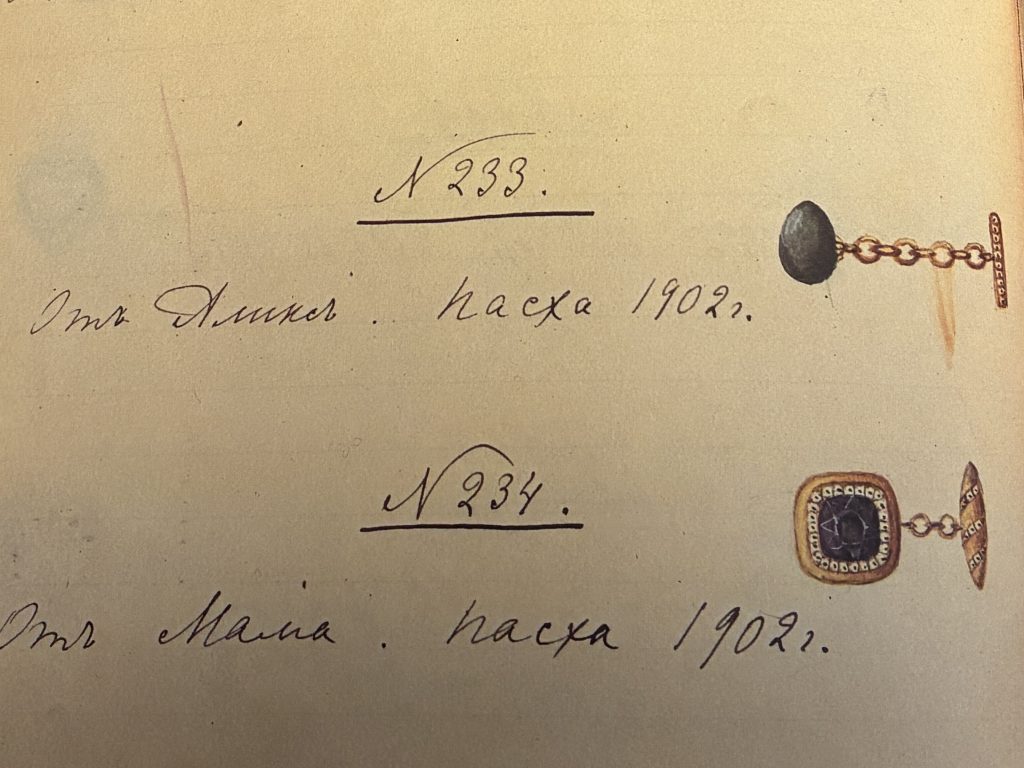
On Easter Sunday in 1902, Empress Alexandra Feodorovna presented Tsar Nicholas II with a pair of egg-shaped cufflinks by Kollin—objects he later recorded in his personal jewel album.
Egg-shaped cufflinks like those featured here are rare; Kollin seemed to be the only master jeweler to create them for the Imperial Russian goldsmith.
Conclusion
Moments like this are why one becomes a dealer.
For collectors who understand Fabergé at this level, opportunities are few—and fleeting.